THORNTON’S TRUSTED TREE TRIMMING & PRUNING EXPERTS
ISA-Certified Arborists | Free Estimates | Serving Thornton Homeowners & Businesses for Over 40 Years
Why Tree Trimming Matters in Thornton, CO
Thornton has grown into one of Colorado’s largest cities, and its landscape reflects that growth across several decades — older, tree-lined streets in established neighborhoods like Original Thornton and Thornton Village sit alongside the newer developments spreading north toward Highway 7 and east toward Quebec Street, where younger trees are just beginning to mature. It’s a city with a wide range of tree ages, species, and care needs all existing side by side.
The trees throughout Thornton face a familiar set of Front Range pressures, but with some characteristics specific to the area. Thornton’s position on the plains — north of Denver with relatively open exposure — means wind is a constant force on canopy structure.
The city also sits in one of Adams County’s most active corridors for late-season snowstorms, where heavy wet snow can drop on fully leafed trees in spring and cause sudden, significant limb failure.
Soils across much of Thornton are compacted clay, particularly in older subdivisions where construction grading removed topsoil, and that limits root development and makes trees more susceptible to drought stress and disease. For Thornton homeowners, regular trimming and pruning is not simply a curb appeal consideration — it’s a meaningful investment in protecting property, managing risk, and keeping trees healthy through conditions that are genuinely hard on them.
Our Thornton Tree Trimming & Pruning Services
At Willco Tree LLC, we tailor every trimming and pruning visit to the individual tree and the goals of the property owner. Our ISA-certified arborists assess each tree before a single cut is made — identifying structural weaknesses, disease issues, and growth patterns that inform a proper trimming plan.
Tree Trimming
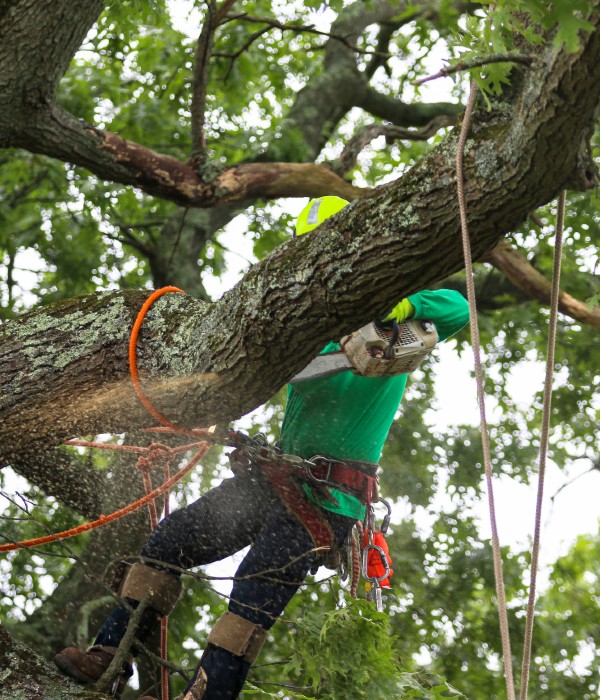
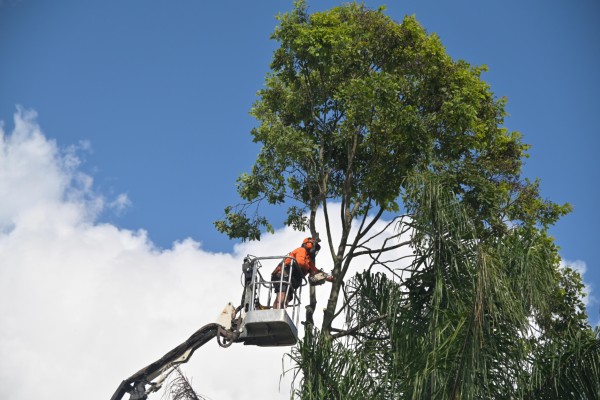
Our trimming service focuses on the overall shape, size, and safety of your tree. We remove dead, dying, and crossing branches; reduce canopy weight over structures and utility lines; and maintain clearance from your home, fences, and driveways. Whether you have a single specimen tree or a full yard of mature trees, we manage the work efficiently with minimal disruption to your property.
Thornton’s mix of tree ages means our approach varies considerably from yard to yard. In Original Thornton and other established neighborhoods, we’re often managing large, mature trees with decades of growth behind them — trees that may have deferred maintenance and need careful, phased work to restore sound structure. In newer developments north of 136th Avenue, we’re frequently doing early structural pruning on younger trees where small corrections now prevent serious problems later.
Ornamental Tree Pruning
Thornton’s residential landscapes are filled with ornamental species — flowering crabapples, ornamental pears, serviceberry, and hawthorns that provide seasonal color and year-round structure. These trees require a species-specific approach that accounts for bloom timing, susceptibility to disease, and natural growth form.
Timing is everything with ornamentals. Pruning a spring-blooming crabapple at the wrong point in the growing season eliminates next year’s flower buds. Making cuts during peak fire blight season — a bacterial disease that affects crabapples, hawthorns, and ornamental pears throughout Adams County — can inadvertently spread infection from tree to tree. We schedule ornamental pruning around species biology and local disease pressure, not just convenience.
Shade Tree Pruning
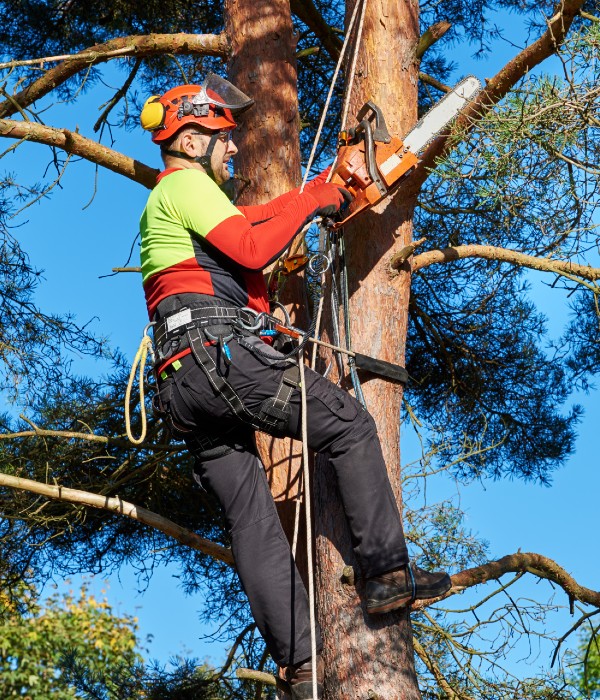
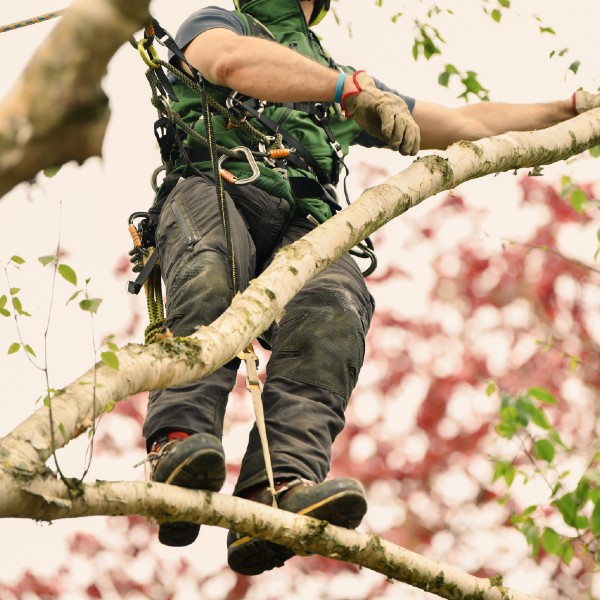
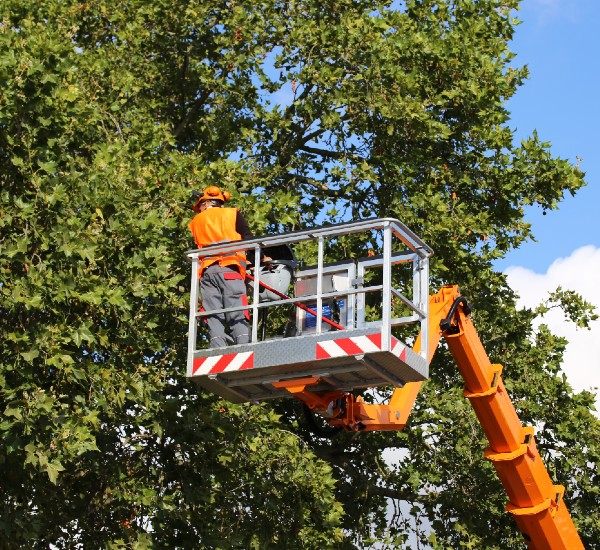
The large shade trees throughout Thornton’s older neighborhoods — cottonwoods, elms, green ashes, and maples — demand a deliberate, species-informed pruning strategy. We perform crown thinning to reduce wind resistance and improve light and air penetration through the canopy, crown raising to create clearance below for structures and traffic, and structural pruning to address weakly attached branches and co-dominant stems before they become failure points.
Green ash trees are particularly prevalent throughout Thornton’s established neighborhoods and deserve special mention. With emerald ash borer confirmed in the greater Denver metro, ash trees across Adams County are at risk.
Proper pruning maintains tree health and structural integrity while property owners assess their long-term management options — treatment, replacement planning, or eventual removal.
Hazard Branch Removal
Some branches require immediate attention regardless of where a tree is in its pruning cycle. Branches showing advanced decay, significant cracks, or heavy die-back over structures, driveways, or areas where people spend time represent active risks that shouldn’t wait for scheduled maintenance.
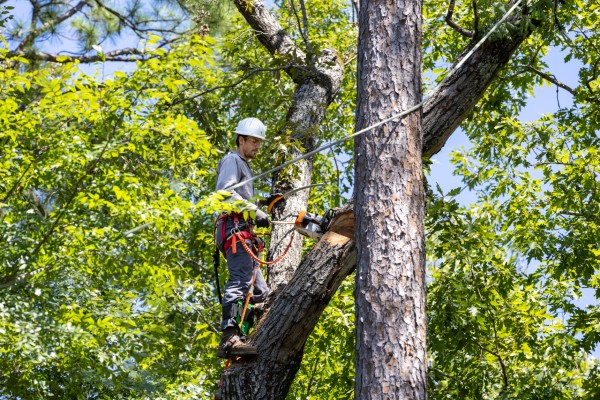
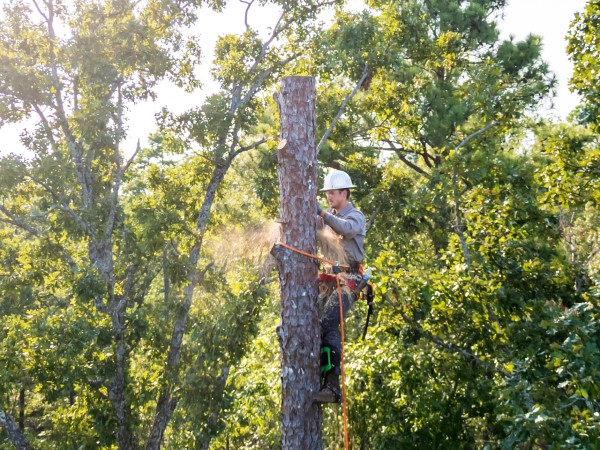
Our crew removes hazard branches safely using rigging and lowering techniques that protect everything below. We document our findings so you have a clear record of what was identified and addressed.
Pre-Storm & Post-Storm Trimming
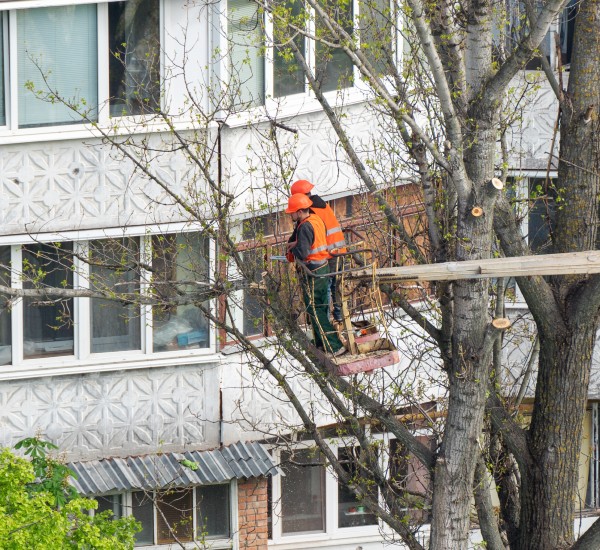
Thornton’s open northern exposure makes storm preparedness an important part of tree management here. Before a predicted heavy snow or significant wind event, proactive trimming reduces canopy mass and removes compromised branches before they fail under load.
After a storm, we assess and address broken, hanging, and split limbs with the care required to avoid triggering additional structural damage to the remaining tree. We offer 24/7 emergency response for urgent post-storm situations throughout Thornton and Adams County.
Shrub & Evergreen Pruning
We also prune shrubs and evergreens throughout Thornton properties — maintaining shape, removing deadwood, and keeping growth proportional to the surrounding landscape.
From overgrown junipers along a foundation to columnar evergreens screening a backyard, we bring the same attention to plant health and long-term form that guides all our work.
Why Choose Willco Tree in Thornton
- Over 40 years of experience serving the Denver metro — including Thornton — since 1977
- ISA-certified arborists who know Colorado tree species and Front Range climate conditions
- Family-owned and operated — we treat your property the way we’d treat our own
- Licensed, insured, and committed to clean, professional job sites
- Free estimates for all trimming and pruning work in Thornton
- Serving residential and commercial properties throughout Thornton, including Original Thornton, Thornton Village, Eastlake, and communities north toward Highway 7
Ready to schedule your tree trimming or pruning service in Thornton? Call Willco Tree LLC today or fill out our online form for a free, no-obligation estimate. We’re available weekdays and Saturdays from 7AM–Noon for estimates, with emergency service available 24/7.
📞 Call: 303-647-5590
Frequently Asked Questions
For most deciduous trees in Thornton, late winter — February through early March — is the optimal pruning window. Trees are dormant, wounds close efficiently once spring growth resumes, and the full branch structure is visible without foliage. That timing also gets ahead of the fungal and insect activity that increases across Adams County as temperatures rise in spring. Dead or hazardous branches should be removed whenever they’re identified, regardless of season. Spring-blooming ornamentals like crabapples, hawthorns, and ornamental pears are best pruned right after flowering to protect next year’s buds. Our arborists will advise on the right timing for each species on your property.
Yes, this is a legitimate concern for Thornton homeowners. Emerald ash borer has been confirmed in the greater Denver metro, and ash trees throughout Adams County are at risk. Green ash is one of the most commonly planted street and shade trees in Thornton’s established neighborhoods, which means the potential impact here is significant. Signs of infestation include canopy die-back starting at the top of the tree, S-shaped galleries visible under the bark, increased woodpecker activity, and D-shaped exit holes in the bark. If you have ash trees, having them evaluated by an ISA-certified arborist is a worthwhile step. Preventive treatment options exist, and the sooner a plan is in place, the more options you have. We assess ash trees throughout Thornton and can help you understand what you’re working with.
They do, and earlier than most homeowners expect. Trees in their first 10 to 15 years are in the critical window for structural pruning — establishing a strong central leader, removing competing stems, and correcting narrow branch angles that will become structural weaknesses as the tree grows. Trees planted in new subdivisions often receive the minimum care required for establishment and little follow-up after that. By the time structural problems become obvious, they’re significantly harder and more expensive to correct. Our arborists take an honest approach with young trees — we’ll tell you what’s worth addressing now, what can wait, and what’s within normal growth variation for the species. The investment in early structural pruning pays off across the entire life of the tree.
Thornton’s position on the open plains north of Denver means trees here are regularly exposed to sustained winds and strong gusts with limited natural windbreak. That wind load is a primary driver of limb failure and whole-tree structural stress, especially in trees with dense, unpruned canopies. Crown thinning — selectively removing branches throughout the canopy interior to reduce density — is the most effective pruning response to wind exposure. A thinned canopy allows wind to pass through rather than pushing against a solid mass, which dramatically reduces the force transferred to branch attachments and root systems. For trees near homes, fences, or parked vehicles, we prioritize the canopy quadrants most directly exposed to prevailing winds.
Rarely. Most mature trees, even those with significant deferred maintenance, can be brought back to a safer and healthier condition with a thoughtful, phased pruning approach. The key is being realistic about what can be accomplished in a single visit versus what needs to happen over multiple seasons. Removing too much canopy from a large, neglected tree at once can stress it severely — the general guideline is removing no more than 25% of the live canopy in a single pruning. Our arborists assess the full picture before making recommendations: the tree’s species, age, current health, the extent of structural issues, and what a realistic multi-visit restoration plan looks like. We’d rather give you an honest assessment upfront than overpromise what one trimming visit can accomplish.
A few are particularly relevant in Thornton and the broader Adams County area. Emerald ash borer is the most significant active threat — any ash trees on your property should be evaluated. Fire blight, a bacterial disease affecting crabapples, hawthorns, and ornamental pears, is common throughout the Denver metro and can spread quickly if pruning is done with contaminated tools or at the wrong time of year. Cytospora canker affects stressed cottonwoods, aspens, and spruces — trees already dealing with drought, compacted soils, or root damage are most susceptible. Honeylocust plant bug causes cosmetic leaf damage that homeowners sometimes mistake for a more serious problem. Our arborists are trained to identify early signs of these and other issues, and we document any concerns we observe during a trimming visit so you have the information to act on them.
It’s a question worth thinking through carefully, and the honest answer is that it depends on the specific tree and what’s driving its decline. Trimming and pruning can address structural problems, reduce hazard risk, and support a tree’s health — but they can’t reverse advanced disease, significant root failure, or major structural compromise in the trunk. Indicators that removal may be the more appropriate path include more than half the canopy being dead or dying, significant decay at the base or in the main trunk, cracks or splits that extend into primary structural wood, and a lean that has developed or worsened recently without a clear mechanical cause. When we provide free estimates throughout Thornton, our ISA-certified arborists give you a straight answer about what trimming can realistically accomplish and when removal is genuinely the safer, more cost-effective choice. We never recommend removal when pruning is a viable option — and we never recommend continued pruning when a tree presents a serious and unresolvable safety risk.
Serving Thornton, CO & Beyond
Our skilled team at Willco Tree is dedicated to providing professional expertise and attentive, personalized service to properly assess, maintain, and treat trees to ensure long-term health and safety. Ready to get started? Reach out to our team today!