24/7 EMERGENCY TREE SERVICE IN THORNTON, CO
Storm Damage | Fallen Trees | Hazardous Limbs — We Respond Fast, Day or Night
Available 24 hours a day, 7 days a week — 303-647-5590
Thornton, CO Tree Emergencies: Why a Fast Response Matter
Thornton, CO’s position on the open plains north of Denver places it squarely in the path of the weather systems that move across Adams County with little natural buffering. High wind events, late-season snowstorms that drop heavy wet loads on fully leafed trees, and the spring and fall storms that define Colorado’s Front Range calendar all hit Thornton with consistent force. The city’s size and density mean that when a significant weather event moves through, tree emergencies don’t happen one at a time. Rather, they happen across the city simultaneously, affecting homes in Original Thornton, newer developments near Highway 7, and everything in between.
What makes Thornton’s tree emergency picture particularly complex is the range of tree ages and conditions across the city. Mature elms, ashes, and cottonwoods in established neighborhoods have decades of growth behind them, and in some cases, decades of deferred maintenance. These are large trees with large canopies, and when they fail, they fail in ways that demand immediate, experienced response.
In newer subdivisions, younger trees that haven’t fully anchored in Thornton’s clay-heavy soils can be wind-thrown more easily than their size might suggest. Both situations, the large mature tree failure and the younger tree that didn’t survive its first major storm, require fast, professional attention to prevent secondary damage from compounding the original event. Willco Tree LLC offers true 24/7 emergency response throughout Thornton, CO, with ISA-certified arborists and the proper equipment to assess and address tree emergencies safely, at any hour they occur.
Thornton Hazardous Tree Services: Willco Tree’s Experienced Care for Urgent Safety Threats
Our emergency response team is equipped to handle the full range of tree-related emergencies Thornton, CO homeowners and property owners face, from major wind events and heavy snow loads to lightning strikes, sudden structural failure, and comprehensive post-storm hazard assessment across an entire property. Every emergency call receives the same response: a real person answers, a crew is dispatched with equipment matched to the situation, and an ISA-certified arborist is on site before any work begins.
Fallen Tree Removal
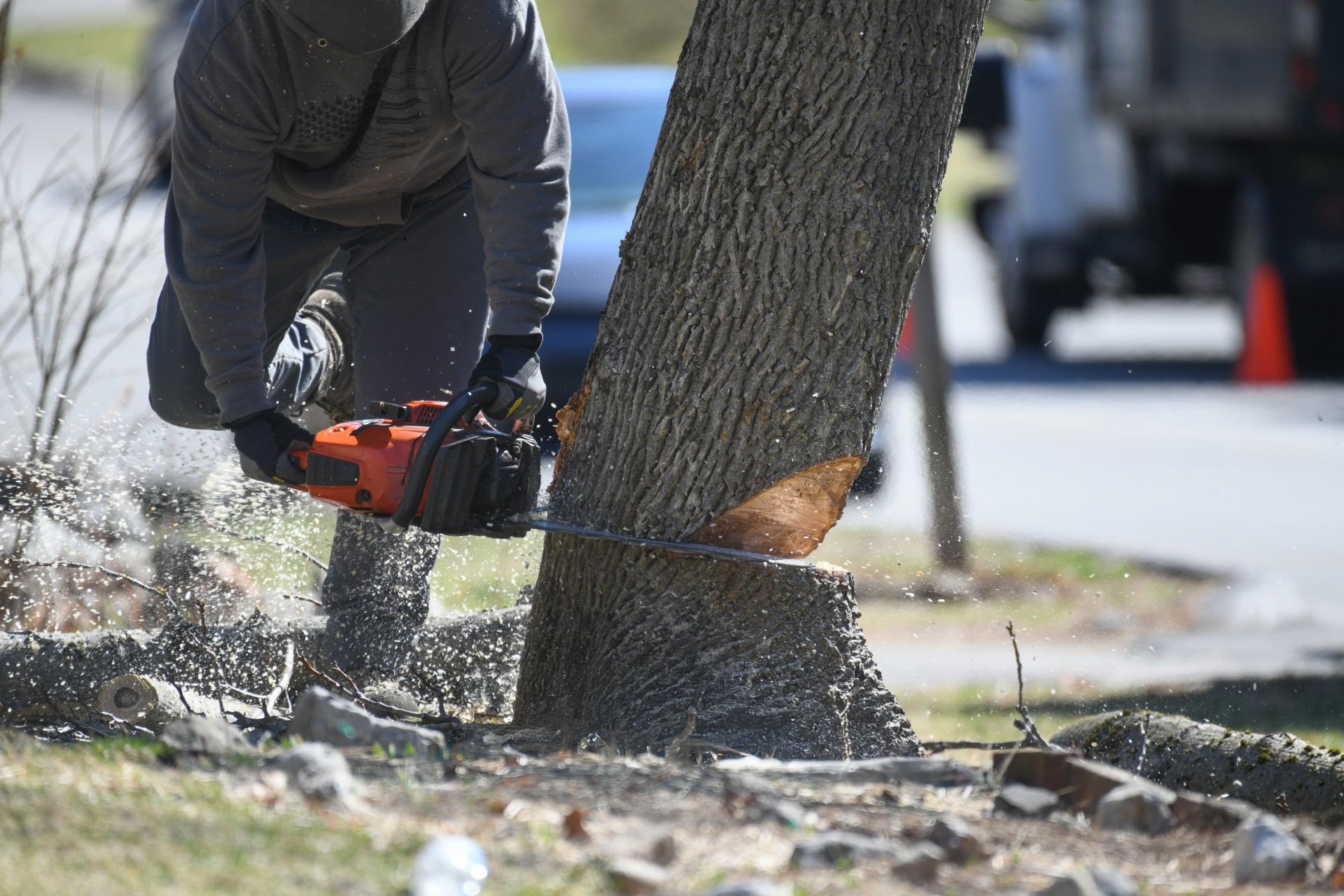
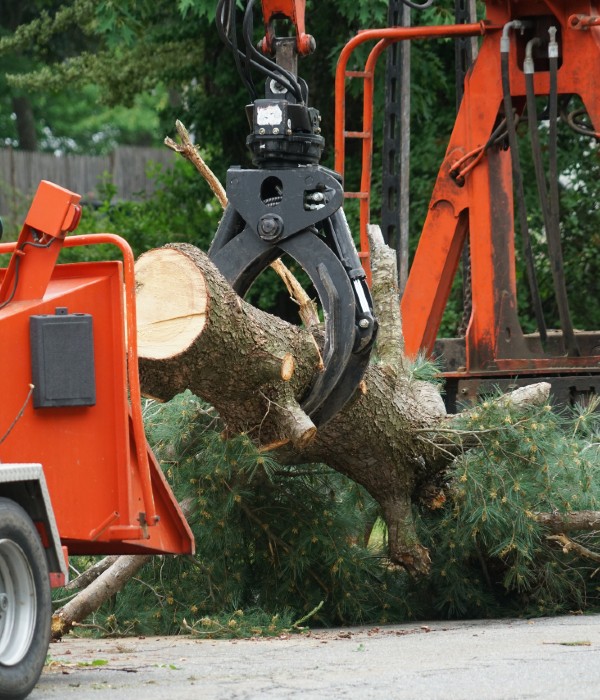
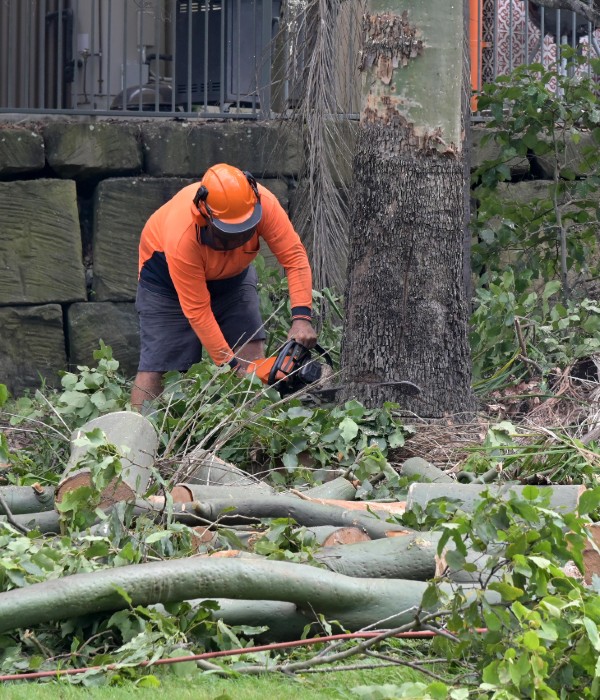
A tree that has come down fully on your home, garage, vehicle, fence, or yard needs to be removed quickly and with careful, deliberate planning. We section and remove fallen trees, assess any structural damage to your property, and haul away all debris so you can begin recovery without additional complications layered on top of the original damage.
In Thornton’s established neighborhoods, a fallen tree rarely lands cleanly. It falls across shared fences, into structures, against utility connections, or through a garage roof in ways that require a controlled, step-by-step removal to keep the situation from getting worse. For example, cutting the tree in the correct order makes a significant difference in preventing further damage by preventing load shifting that can harm the structure underneath. Our crew assesses the full situation and plans the removal sequence before making the first cut, working deliberately even when the urgency of the circumstances is real and pressing.
Hazardous Limb Removal
Hanging, cracked, or partially failed limbs are among the most dangerous tree situations a Thornton, CO homeowner can face, not because of what they’ve already done, but because of what they’re about to do. A limb that has fractured under wind or snow load but remains attached is under unpredictable mechanical stress. The remaining wood fiber holding it may give way in the next gust, under the weight of additional precipitation, or simply as the fracture propagates on its own timeline. Until it’s removed, the area beneath it is not safe.
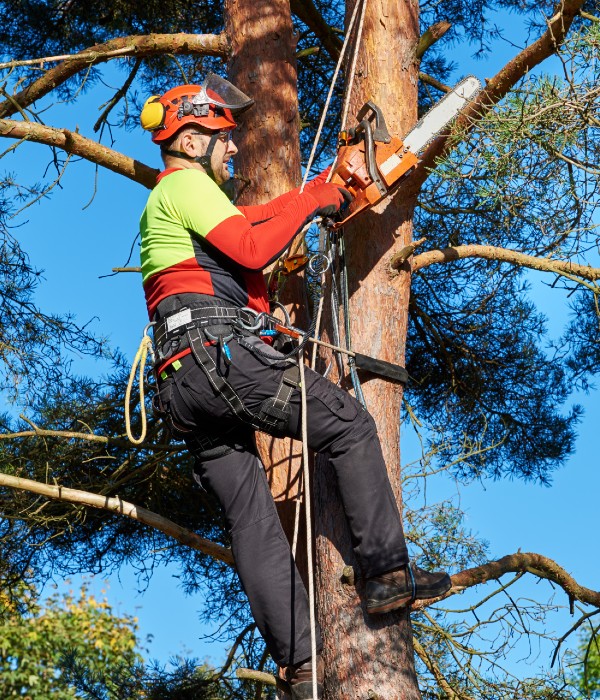
At Willco Tree, we assess and remove hazardous limbs safely using proper rigging techniques to control where material lands and to protect the structures, vehicles, and people below. During every hazardous limb call, we also inspect the surrounding canopy for secondary damage that may not be immediately visible from the ground.
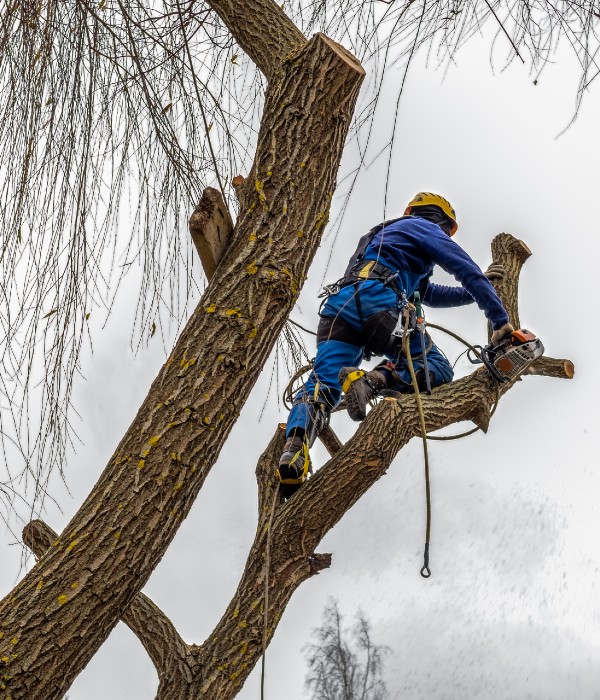
A significant wind or snow event typically affects more of a tree’s structure than the single obvious failure point, and identifying those additional hazard locations during the initial visit prevents a follow-up emergency call in the days or weeks ahead.
Storm Damage Assessment & Cleanup
After a major storm moves through Thornton, the damage that’s immediately visible is often only part of what the storm has done. Split branch unions that are still holding under tension, root systems that have partially heaved in the clay soil, co-dominant stems that have been further stressed by the loading event, and trees that appear intact but have sustained internal structural damage — these are the conditions that produce secondary failures days, weeks, or even months after the original storm has passed.
Our arborists assess storm-damaged trees across your entire property, not just the most obvious problem, identifying compromised stability before it becomes the next emergency. We also handle all debris removal, limb hauling, and site cleanup as part of the service so that your property is clean and safe before we leave.
Do you need an official record of storm damage for insurance or legal reasons? We provide written storm damage assessments when requested, documentation that Thornton, CO homeowners regularly find essential when filing homeowner’s insurance claims, managing situations involving damage from a neighboring property’s tree, or establishing a clear record of what the storm caused and what was done in response.
Emergency Pruning to Save the Tree
Not every tree emergency ends in removal, and we don’t approach them with that assumption. When a tree has sustained a significant limb failure but the remaining structure is sound, or when the damage is isolated to one part of the canopy while the trunk and primary scaffold branches are intact, aggressive emergency pruning can remove the failed or at-risk material while preserving the overall tree. For a mature shade tree in an established Thornton, CO neighborhood, or a large ornamental that anchors a landscape, that outcome is genuinely worth pursuing when it’s viable.
Where emergency pruning is a realistic option, we present it clearly alongside the removal alternative — explaining what can be preserved, what the honest long-term prognosis looks like, and what the practical difference in cost and ongoing risk is between the two paths.
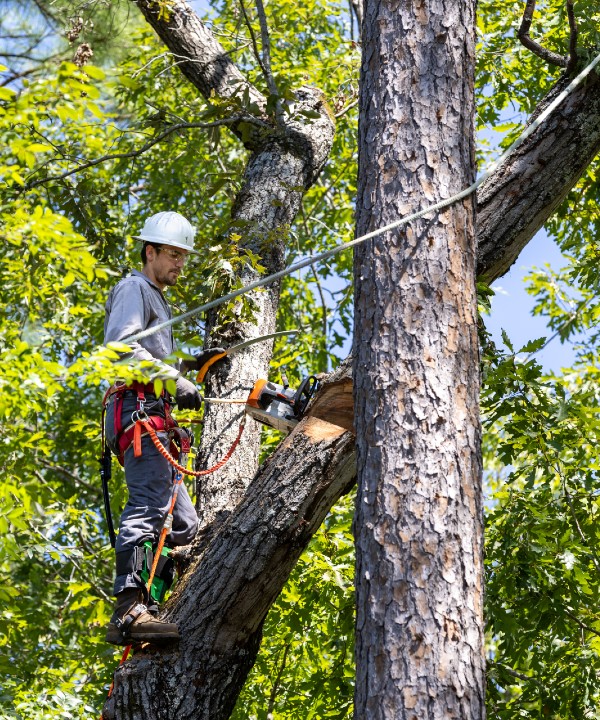
We don’t default to removal when preservation is possible, and we don’t recommend preservation when the tree’s actual condition makes that the less responsible answer.
Lightning Strike Response
Lightning strikes are a specific type of tree emergency that occurs across the Front Range with regularity, and Thornton is no exception. A struck tree may show dramatic external damage, like stripped bark running down the trunk, explosive splits, and blown-out root zones, or it may appear relatively intact while having sustained significant internal vascular damage that isn’t immediately visible from the outside. Both situations require prompt professional assessment and different responses.
A tree with major structural damage from a strike typically needs to be removed before the compromised wood dries out, becomes brittle, and creates a more complex and unpredictable hazard. A tree that appears mostly intact after a strike still warrants a certified arborist evaluation, as the internal damage from a lightning event can manifest as delayed decline over the weeks and months following the strike. Identifying those indicators early determines whether the tree is a viable long-term asset or a developing hazard.
We respond to lightning strike calls throughout Thornton, CO and provide straightforward assessments of what the event has actually done to the tree’s structure and viability.
Utility Line & Roof Clearance Emergencies
When limbs fall on a roof or power lines, they require immediate attention and a cautious approach. If lines are involved, we coordinate with the utility company to make sure the power is managed before we start cutting. We never work on live lines, and we make sure our clients understand the plan upfront so there is no confusion about safety on the job site. For trees or limbs resting on roofs, we work methodically to remove material without causing additional damage to the roof surface beneath, documenting conditions thoroughly to support insurance claims. In Thornton, CO’s established neighborhoods, where large trees have grown close to homes and overhead lines over decades, these situations are among the more common emergency calls we receive.
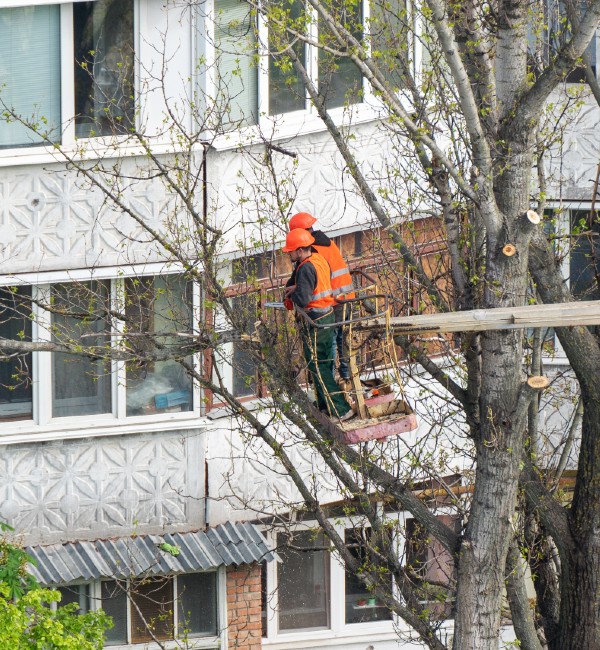
What to Expect When You Call Willco Tree for an Emergency in Brighton
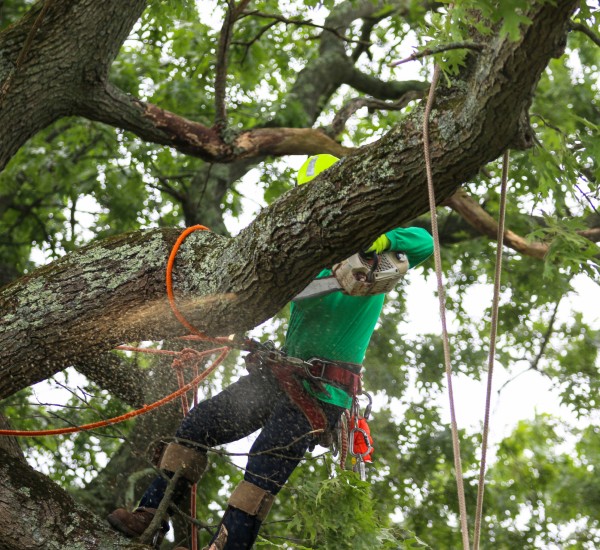
- Immediate phone response — a real person, 24 hours a day, every day of the year
- Rapid dispatch to your Thornton property with equipment matched to the specific situation
- On-site assessment by an ISA-certified arborist before any work begins
- Clear explanation of the situation, the recommended approach, and the expected cost — no surprises
- Safe, controlled removal or stabilization of the hazard
- Full debris cleanup and hauling — we leave your property clean when the job is complete
- Written documentation available for insurance purposes when needed
Why Brighton Homeowners Call Willco Tree First
- True 24/7 availability — not an answering service, but a team ready to respond and dispatch
- Over 40 years serving Thornton and the Denver metro since 1977 — we know the territory and the conditions
- ISA-certified arborists who make safe, informed decisions under pressure
- Fully insured for all emergency tree work — protecting you and your property
- Family-operated and locally based — our reputation in this community matters to us
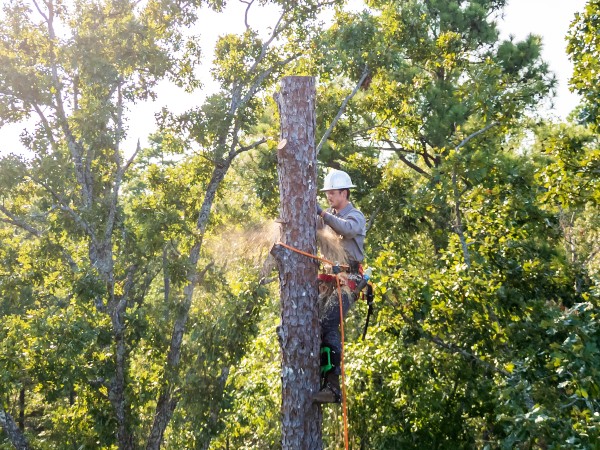
If you’re dealing with a tree emergency in Thornton, CO right now, don’t wait. Call Willco Tree LLC immediately. We’re available around the clock and will dispatch a team to your property as quickly as possible.
Emergency Line: 303-647-5590
For non-urgent inquiries, you can also fill out our contact form, and we’ll follow up promptly during business hours.
Frequently Asked Questions
A true emergency is any situation where a tree poses an immediate threat to people or property. Call immediately if: a tree or large limb has fallen on your home, garage, vehicle, or utility infrastructure; a limb is visibly cracked, fractured, or partially detached above an area where people live, work, or pass through regularly; a tree has developed a sudden lean that wasn’t present before the storm event; or a lightning strike has caused visible damage to a tree near your home or outbuildings. In Thornton’s wind environment, situations that might be safely monitored for a day or two in more sheltered locations warrant faster action. The next wind event is rarely far away, and a compromised limb that survives one storm may not survive the next. When you’re genuinely unsure whether your situation is an emergency, call us. Our team can help you assess the urgency over the phone and advise on whether immediate dispatch is warranted or whether a scheduled appointment is the appropriate response.
Begin your assessment from a safe distance and identify the most obvious concerns first: visibly hanging or fractured limbs; trees that have developed a new lean; and any material that has already come down near structures, vehicles, or utility lines. Don’t walk directly beneath a tree that may have sustained damage, and don’t attempt to move or cut hanging material yourself. Beyond the obvious, look for subtler indicators that warrant a professional assessment: soil heaving or cracking around the base of a tree, which suggests root system disruption; bark splits or cracks in the main trunk that weren’t present before the storm; and gaps in the canopy where branches may have already failed and fallen without landing somewhere you can see them. After a significant Thornton, CO wind event, we recommend having any tree near a structure assessed by a certified arborist even when visible damage isn’t obvious. The root-level and internal structural damage that precedes future failure often isn’t visible from outside the tree until the failure is already in progress.
Yes, in a specific and important way. Ash trees affected by emerald ash borer, which is confirmed in the Denver metro and poses a direct threat to Thornton’s extensive ash population, can appear structurally sound from the outside while the internal wood is significantly weakened by the pest’s activity beneath the bark. A storm-damaged ash that is also dealing with an active or advanced infestation may be considerably more structurally compromised than a healthy tree of similar size and appearance. This matters for emergency response because the wood behavior during sectioning and removal can be less predictable than with a healthy tree. Our crew is experienced with emerald ash borer-affected trees throughout Thornton and accounts for the wood condition in how we plan and execute emergency removals. If you have ash trees that haven’t been assessed recently, a pre-storm evaluation is worth scheduling. It’s far better to understand what you’re dealing with before an emergency than to discover it during one.
This is a situation we encounter regularly in Thornton’s newer developments, and the explanation usually comes down to root establishment. Trees planted in newer subdivisions are often growing in disturbed, compacted soils left by construction grading — conditions that significantly limit how deeply and broadly root systems can develop in the first several years after planting. A tree that looks healthy and reasonably sized above ground may have a root system that hasn’t yet anchored deeply enough to resist significant wind loading. Older trees in established neighborhoods have had decades to develop extensive root systems that provide far more stability, even in Thornton’s clay soils. The practical takeaway for newer subdivision homeowners is that recently planted trees, generally those in the ground for fewer than five to seven years, are more wind-throw vulnerable than their size suggests. Staking, proper establishment care, and early structural pruning all contribute meaningfully to how well they handle their first major storm events.
We maintain 24/7 availability specifically because large storm events don’t happen on a schedule, and they rarely affect just one property at a time. When a significant weather system moves through Thornton, CO and generates multiple simultaneous emergency calls across our service area, we triage based on the severity of the hazard each situation presents. Active roof damage with ongoing weather exposure, utility line contact, and imminent failure situations over occupied areas receive priority dispatch. Situations that are serious but stable — a fallen tree in a yard that hasn’t damaged a structure, for example — are addressed as quickly as possible in the queue that follows. When call volume is high, we communicate honestly about realistic timelines rather than giving optimistic estimates we can’t deliver on. If your situation is triaged as lower urgency, we’ll tell you that clearly and give you an accurate picture of when to expect our crew.
Keep everyone out of the affected rooms or areas of your home until the tree has been fully assessed and removed. The structural condition of a roof with a tree on it isn’t always obvious from inside, and trees resting on structures can shift in ways that aren’t predictable. If you can safely do so from inside the home, place towels, buckets, or plastic sheeting to manage any water intrusion through a compromised roof, but do not go onto the roof yourself under any circumstances. Take photographs of the situation from safe vantage points before anything is moved, both for your own records and for the insurance claim process. Contact your homeowner’s insurance provider as soon as possible to report the damage and open a claim, even before the tree is removed. When our crew arrives, our arborist will assess the full situation before any cutting begins. The sequence in which a tree resting on a structure is sectioned is critical. Getting that sequence wrong shifts the load in ways that can cause additional structural damage, so we plan that sequence deliberately and carefully before the first cut is made.
In most cases, homeowner’s insurance covers emergency tree removal when the fallen tree has damaged an insured structure. Your home, a detached garage, or a fence are the most common examples. Standard policies generally do not cover removal of a tree that has fallen in your yard without damaging a structure, nor the proactive removal of a hazardous tree that hasn’t yet come down. Policy terms, coverage limits, and deductibles vary significantly between providers and individual policies, so contacting your insurance company as soon as possible after a storm event, before removal if timing allows, is always the recommended first step. Thorough documentation consistently helps Thornton, CO homeowners navigate the claims process effectively, including photographs of the damage before any material is moved and a written assessment from a certified arborist describing the tree’s condition, what caused the failure, and what was done to address it. At Willco Tree, we provide that documentation as part of our emergency response service throughout Thornton, and we can coordinate the timing of our work to allow for insurance adjuster review when the safety situation makes that practical.
Serving Thornton, CO & Beyond
Our skilled team at Willco Tree is dedicated to providing professional expertise and attentive, personalized service to properly assess, maintain, and treat trees to ensure long-term health and safety. Ready to get started? Reach out to our team today!